



EcoIngredient Compass®
Rose, Geranium, Green
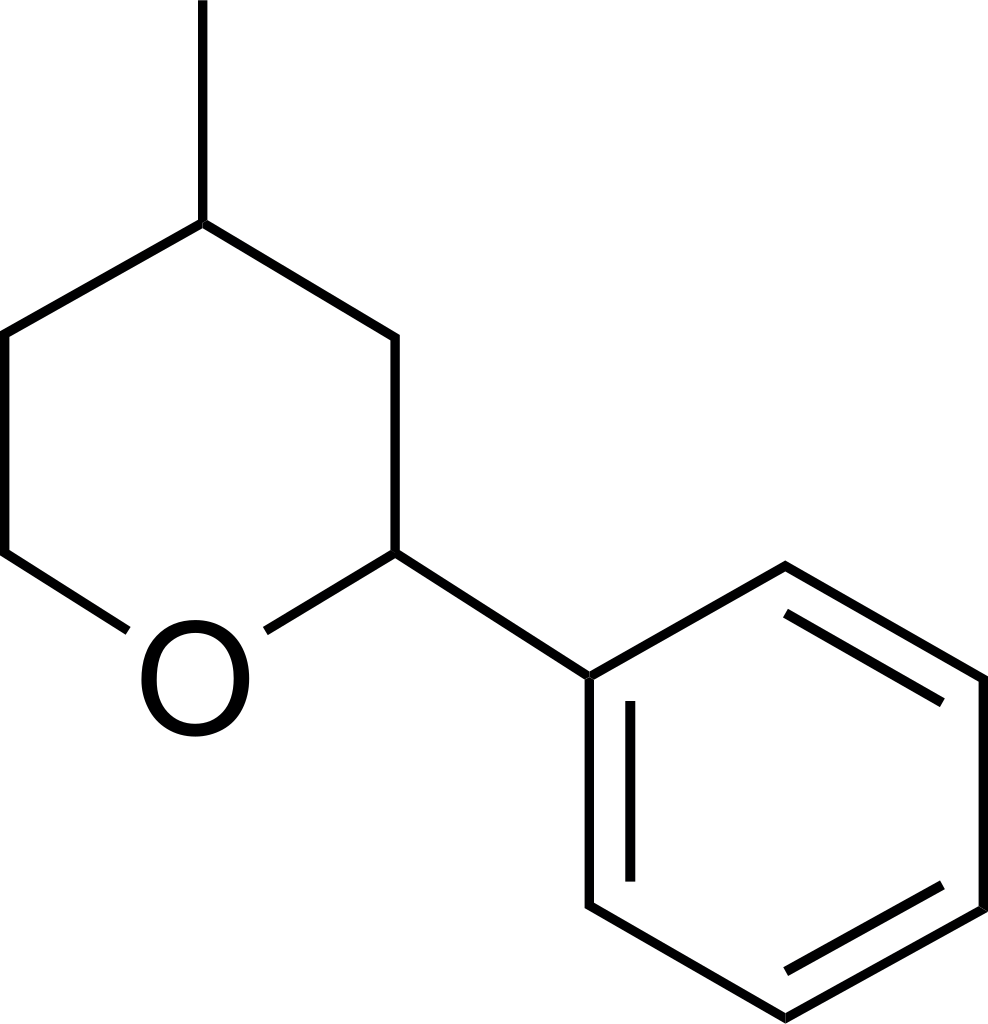
Rose, geranium and green note reminiscent of Rose Oxide.
A powerful and performant rosy note that is more complex than Rose Oxide and more refined than Diphenyl Oxide.
Doremox® combines well with many floral perfumes as well as with aromatic, herbal, citrus and fruity notes.
It can be used as Rose Oxide enhancer or substitute.
It gives fresh diffusive effects.
Chemical synthesis corresponds to the construction of complex chemical compounds from simpler ones.
Our R&D follows the principles of Green chemistry whenever possible.
The fascinating story of dsm-firmenich floral rosy molecules started in 1982 with the powerful Phenylhexanol, renowned for extending the longevity of floral accords. In 1986, the synthesis of Cyclomethylene citronellol added a second highly effective alternative to rose alcohols complementing Phenylhexanol with its soft, flowery notes. The discovery of Doremox® in 1993 marked a significant milestone, bringing a powerful and complex molecule, an ideal rose oxide substitute.
The twentieth century saw the development of Centifolether, valued for its exceptional stability and distinctive top note alongside the powerful Dorysane, another alternative to rose oxide.
In recent decades, our R&D discovery program has enhanced our palette with cost-efficient captive floral notes, such as Roseolate®, rose, lychee, quince with a sage undertone reminiscent of Sclareolate®, as well as Yodanol®, a versatile floral building block homologue of Phenylhexanol.
With DRT acquisition, the Floral Rosy family has been enriched with renewable, low carbon footprint Geranyl and Neryl acetates as well as some Geraniol specialties, turpentine derived.